


13 Mar Healthy Nutritive Desserts from the Chinese Herbal Medicine Tradition: Peach Resin Herbal Dessert Soup (táng shuǐ) with Job’s Tears, & Peaches simmered in Chrysanthemum–Cinnamon Tea
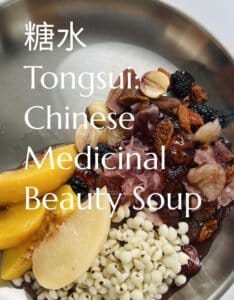 Táng Shuǐ/Tong Sui are a variety of nutritive desserts that have been eaten in Chinese culture for centuries. By using sweet and tasty Chinese herbs that are superfoods with unique properties, these desserts not only helped end a meal with style, but are loaded with nutrition, and in many cases are aimed at supporting the health of the Blood and Body Fluids for beauty purposes, such as improving the health of skin, hair, have anti-ageing properties, and really support the body nutritionally. So it’s a tasty treat that is good for you!
Join us in making Tonika Health’s peach-inspired variation of this nourishing dessert, rooted in the Chinese herbal medicine tradition!
This sweet medicinal soup (táng shuǐ) can be served warm in cooler seasons or chilled in warmer months — both are equally delicious.
Traditional Benefits
- Nourish and regulate Blood and Body Fluids
- Hydrate the skin and tissues
- Support collagen production
- Promote healthy circulation
- Help clear inflammation
- Strengthen the Lungs and Kidneys (Metal & Water elements)
- Support digestive Qi
- Help clear turbid fluids from the body
Recipe Components
All ingredients can be found at Chinese herbal shops or Asian grocers.
Tea / Broth Base
• Chrysanthemum (jú huā)
• Cinnamon (ròu guì or guì zhī)
• Water
Accompaniments
• Simmered peaches
• Cooked Job’s Tears (yì yǐ rén)
Herbal Ingredients
• Peach Resin (táo jiāo)
• Snow Fungus / Tremella (xuě ěr)
• Goji Berries (gǒu qǐ zǐ)
• Dried Longan (lóng yǎn ròu)
• Chinese Mulberries (sāng shèn zǐ)
• Red Dates (hóng zǎo)
• Lotus Seeds (lián zǐ)
Method
1. Prepare the Chrysanthemum–Cinnamon Tea
Steep 1 handful dried chrysanthemum flowers in 1 litre of hot water for under 3 minutes.
Pour into a pot on medium–low heat, add:
• 1–2 cinnamon sticks
• rock sugar (bīng táng) to taste
Bring to a gentle simmer.
2. Simmer the Peaches
Wash and slice peaches, removing the stones but keeping the skin on.
Allow ½–1 peach per person.
Add peaches to the tea and simmer until soft but not mushy.
Remove peaches and set aside, keeping the broth in the pot.
3. Cook the Job’s Tears
Simmer 100g Job’s Tears (yì yǐ rén) in water for about 1 hour, until soft but slightly springy. Drain and set aside.
 4. Prepare the Táng ShuǐHerbal Soup
Add the following to the peach-infused tea broth.
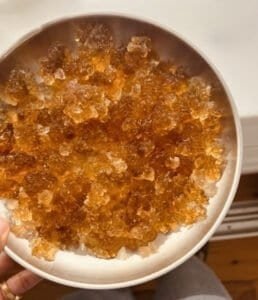
• Peach Resin (táo jiāo) – 50g
Soaked overnight (8–12 hrs), rinsed and cleaned
• Snow Fungus (xuě ěr) – 1 handful
Soaked 15–30 minutes and stem removed
• Lotus Seeds (lián zǐ) – 1 handful
Soaked and green centres removed
Simmer 15 minutes.
5. Second simmer – another 15 minutes
Add:
• Red Dates (hóng zǎo) – sliced, seeds removed
• Dried Longan (lóng yǎn ròu) – 1 handful
• Chinese Mulberries (sāng shèn zǐ) – 1 handful
Simmer another 15 minutes.
 Avoid cooking longer than 30 minutes total, as the peach resin may dissolve
6.Final Step
Remove from heat and stir in:
• Goji Berries (gǒu qǐ zǐ) – 1 handful
The soup should become lightly thick and gelatinous.
Any excess broth can be saved as a sweet herbal syrup or cooling drink.
To Serve
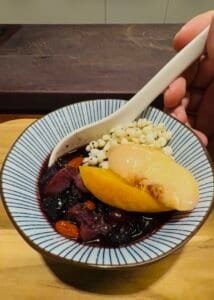
• simmered peaches
• Táng Shuǐ herbal soup
• cooked Job’s Tears
Serve warm, or chill all components and enjoy cold.
Leftovers can be stored in the refrigerator.
Watch us create the Dessert here
A fruit of immortality that protects you from ghosts ?! 

Learn about this revered fruit in Traditional Chinese Medicine.
Check out our video to learn more!
Peaches have an important place in Chinese Medicine and culture, and as per the principles of Chinese Herbal medicine- many parts of the peach plant are used for their special properties:
As mentioned in our reel- the peach blossom, the fruit, the kernel of the peach(inside the stone/seed), the peach wood, and the peach resin/sap are all used for their various beneficial medicinal properties.
Interestingly, the wood of the peach tree is also traditionally used to create the fire to cook and smoke the famous Peking/Beijing Duck to create a unique flavour!
The leaves of the peach tree can also be used as a soothing and anti-inflammatory poultice externally applied for the skin.
So what is the ghost thing about?? Why would peach tree wood ward away unfavourable energies?- I haven’t done vibrational analysis on it to date, but most likely it emits beneficial waves of health (good vibes), which is evidenced by the fact this plant is used medicinally in many ways….
As you can note, the humble peach is a hero of Chinese medicine and culture, and that’s why it’s also the hero for our “Tang Shui” dessert.
More about Peach Gum/Resin (táo jiāo) for beauty:
A closer look at Peach Gum / Resin (táo jiāo).
An ingredient often used in TCM dietary therapy.
Check out our Vid on peach gum that we made in the clinic!
Peach Gum/Resin for Health- Buying Guide:
This“Táng Shuǐ” delicious dessert ingredient not only adds a fascinating texture but has health properties that make this dessert ingredient great for the skin, fascia and connective tissues.
Unfortunately, like some other Chinese herbal medicinals on the market- there are some things to be aware of when purchasing, so you are buying the real thing for its health properties and not an adulterated version. If possible- buy from a reputable source.
Very round” or perfectly spherical peach gum is often considered fake or heavily processed/adulterated, rather than the natural, irregular “tears” of the peach tree.
Here is a breakdown of why, and how to spot authentic peach gum:
Why “Very Round” is Suspicious:
* Natural Appearance: Real peach gum (resin) is an irregular, jagged, amber-coloured crystal that is secreted and forms when a peach tree’s bark or branches are damaged. It is naturally sticky and uneven in shape. I used to experience this weird substance when climbing on my grandmother’s peach tree as a child!
* Adulteration: Extremely uniform, round balls usually indicate that the resin has been melted down and re-moulded, or mixed with other ingredients (like starches or gums) to make them look more appealing.
* Quality Indicator: While some high-grade “cleaned” products may look smoother, perfectly round, uniform pellets are often a sign of artificial shaping, not natural formation.
How to Identify Authentic Peach Gum:
* Irregular Shapes: Real peach gum ranges in size and shape, often with dark impurities (bark/dust) that need to be soaked out.
* Translucency: Hold a piece up to the light—it should look like clear, amber-coloured glass or resin.
* Rehydration: Real peach gum expands, softens, and becomes a bouncy, jelly-like texture after soaking for 8+ hours.
Tips for Buying:
* Choose Natural Shapes: Look for irregular, amber crystals (as seen in the pre-soaking part of our reel) rather than perfect, uniform balls.
* Avoid “Too Clean”: If the peach gum is perfectly clean, uniform, and round, it is more likely to be processed, which may affect its natural collagen-like properties.
* Buy from a reputable supplier that has a long and reliable history such as Tong Ren Tang/Bei Jing Tong Ren Tang or other reputable Chinese herbal shops.
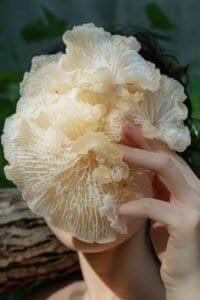 Tremella/Snow Fungus- A hidden hero of our dish:
Why a hidden hero? Snow fungus (xuě ěr) is the ancient beauty food of Chinese medicine.
Rich in hydrating polysaccharides (often compared to natural hyaluronic acid), snow fungus helps nourish the skin from within, support immunity, and gently replenish Yin, especially when there’s dryness in the body, skin, or lungs.
When using tremella mushroom, we make sure that we balance the amount that we use so that it does not overpower the flavour and texture of the dish, but we should still have a decent quantity, due to its unique properties. Interestingly-It will absorb the unique colours and sweet flavours of the dish and soften further when you leave it in the fridge to have chilled at a later time.
 How to consume it?: Soak dried snow fungus in warm water until soft, remove the stem, chop, then simmer into soups, broths, or sweet tonics (traditionally with pear, jujube, or goji berries), or as used in our “Táng Shuǐ” recipe.
A simple ritual for deep hydration  inside and out. Check out our fun little vid on Tremella here so you can see it’s unique texture and pliability upon hydration.
We wish you well with your “Táng Shuǐ” dessert making and eating process!
Enjoy, and be well nourished by the goodness of this historical soup of Chinese Herbal medicine!
Article written by our acupuncturist and Chinese medicine practitioner: